
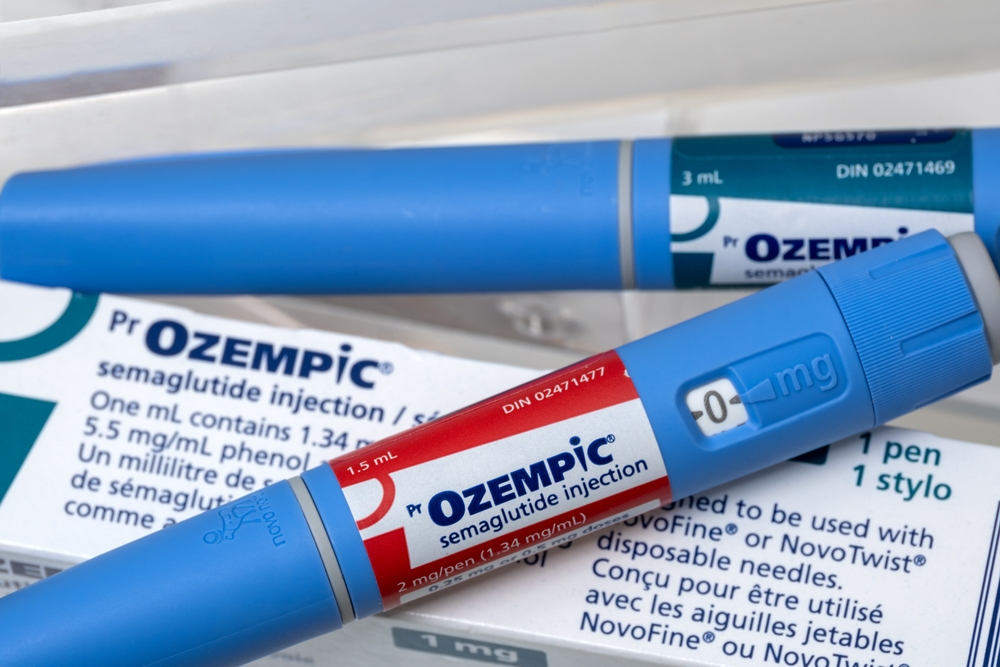
Using your Ozempic pen correctly comes down to three things: storing it at the right temperature, injecting with a fresh needle every time, and disposing of used needles safely. Get those right, and the rest is just following the pen’s built-in dose counter.
Ozempic (semaglutide) comes in a pre-filled, multi-dose pen designed to be simple once you know the steps. This guide walks through storage, a full injection walkthrough, what to do when something doesn’t look right, and safe disposal – everything you need whether you’re using your first pen or your fiftieth.
Key takeaways
- Ozempic pens come in three colors matching three dose ranges: red (0.25 mg/0.5 mg), blue (1 mg), and yellow (2 mg) – each pen holds 4 weekly doses.
- Store unopened pens in the refrigerator (36-46°F). Once you start using a pen, it’s good for 56 days at either room temperature (59-86°F) or in the fridge.
- Always attach a new needle before each injection, and always perform a flow check (“priming”) with any new pen before your first dose from it.
- Rotate your injection site between your abdomen, thigh, and upper arm to reduce irritation.
- If the dose counter won’t turn to your prescribed amount, the pen is empty – even if you can still see liquid inside.
- Never use a pen that’s been frozen, that shows cloudy or discolored liquid, or that’s past its expiration date.
What is an Ozempic pen, and how many doses does it hold?
The Ozempic pen is a pre-filled injection device that simplifies giving yourself a weekly semaglutide dose. Each carton includes the pen along with NovoFine Plus needles designed specifically for it.
Ozempic comes in three pen types, identified by color and total dose strength:
|
Pen color |
Delivers |
Total content |
Doses per pen |
|---|---|---|---|
|
Red |
0.25 mg or 0.5 mg |
2 mg |
4 weekly doses |
|
Blue |
1 mg |
4 mg |
4 weekly doses |
|
Yellow |
2 mg |
8 mg |
4 weekly doses |
The red pen covers both the starting dose (0.25 mg) and the first maintenance step (0.5 mg) – your prescriber will tell you which dose to dial in. Each pen is designed to last about 4 weeks with one injection per week.
How to store your Ozempic pen
Storage affects both the safety and effectiveness of your medication, so it’s worth getting right from day one.
Before first use. Keep your Ozempic pen refrigerated between 36-46°F (2-8°C). This keeps the medication stable until you’re ready to start using it. Unopened pens can stay in the fridge until the expiration date printed on the label.
After first use. Once you’ve used the pen for the first time, you have two storage options:
- Room temperature, between 59-86°F (15-30°C), or
- Refrigerated, between 36-46°F (2-8°C)
Either way, the pen is good for 56 days after first use. Mark that date on your calendar and dispose of the pen once it passes – even if there’s medication left inside.
A few things to avoid:
- Never freeze it. Freezing can damage the medication’s integrity. If a pen has frozen, don’t use it, even if it’s since thawed.
- Keep it away from heat and direct light, which can reduce potency over time.
- Don’t store it directly against the refrigerator’s cooling element – this can accidentally freeze the pen even inside the fridge.
How to inject your Ozempic pen, step by step
Your healthcare provider should walk you through this before your first injection, but here’s the full process as a reference.
Prepare the pen
- Check the pen. Confirm it hasn’t expired, and if it’s already been in use, confirm you’re still within the 56-day window. The medication itself should look clear and colorless – if it’s cloudy or has visible particles, don’t use it.
- Attach a new needle. Use a fresh needle for every single injection, no exceptions. Tear off the paper tab, then push and turn the needle onto the pen until it’s snug. Pull off both the outer and inner needle caps.
- Run a flow check. Do this with every new pen before its first dose. Turn the dose selector until the counter shows the flow check symbol, then press and hold the dose button until the counter reaches zero. You should see a drop of medication appear at the needle’s tip – that confirms the pen is working correctly.
Give the injection
- Select your dose. Turn the dose selector until the counter shows your prescribed amount – this is the actual dose (0.25 mg, 0.5 mg, 1 mg, or 2 mg), not a step number.
- Inject. Insert the needle into your skin at the injection site, then press and hold the dose button. Once the counter reaches zero, keep the needle in place and slowly count to six before withdrawing it. Removing the needle too early can leave part of the dose undelivered.
Inject into your abdomen, thigh, or upper arm. Rotate between these sites and between spots within each site to reduce irritation and skin changes over time.
Related reading: How to treat a semaglutide injection site reaction
After the injection
- Remove and dispose of the needle. Twist it off the pen immediately after use – don’t leave a used needle attached, since this can let air into the pen or cause leakage.
- Replace the cap. If this wasn’t your last dose from the pen, put the outer cap back on for storage.
Common Ozempic pen problems and how to solve them
- The dose selector won’t turn to your prescribed dose. This almost always means the pen is empty, even if you can still see liquid inside – the remaining volume isn’t enough for a full dose. Start a new pen rather than trying to force the selector.
- No drop appears during the flow check. Try the flow check again with a new needle attached. If you still don’t see a drop after a couple of attempts, don’t use that pen – contact your pharmacy or Novo Nordisk for guidance rather than injecting it.
- The injection button is hard to press. Don’t force it. A stuck button usually points to a mechanical issue with that specific pen rather than something you’re doing wrong. Set it aside and contact your pharmacy for a replacement.
- You’re not sure if you got the full dose. If you removed the needle before finishing your slow count to six, or if the counter didn’t reach zero, you may have received a partial dose. Don’t inject again to “make up the difference” without talking to your prescriber first – they can advise whether to wait for your next scheduled dose or make an adjustment.
- The pen was left out of the fridge or got too warm. Check how long it was exposed and at what temperature against the storage guidelines above. If you’re unsure whether it’s still good, it’s safer to contact your pharmacist and ask before using it.
- You notice bruising, redness, or a lump at old injection sites. This is usually from injecting in the same exact spot repeatedly. Rotate more deliberately between your abdomen, thigh, and upper arm, and space out injection points within each area.
How to dispose of your Ozempic pen and needles
Proper disposal protects you, your household, and anyone who handles your trash. Immediately after each injection:
Use an FDA-cleared sharps container if you have one. These are purpose-built for safely containing used needles and pens, and you can get them from most pharmacies or your healthcare provider.
If you don’t have one, a household container can work, as long as it meets these criteria:
- Heavy-duty plastic construction
- A tight-fitting, puncture-resistant lid that closes securely
- Stable and upright so it won’t tip over
- Leak-resistant, to contain any residual fluid
- Clearly labeled – “Used Sharps” or “Biohazard” works fine
Follow the FDA’s guidelines for proper sharps disposal for local drop-off or mail-back program options – many pharmacies and municipalities offer these at no cost.
Get personalized guidance: Book a consultation with a Heally physician to review your injection technique or troubleshoot pen issues.
The bottom line
Using an Ozempic pen safely and effectively comes down to a short list of habits: store it at the right temperature, always attach a fresh needle, run a flow check on any new pen, hold the injection for the full count, rotate your sites, and dispose of needles properly. Once these become routine, the weekly injection takes less than a minute.
If something about your pen doesn’t look or behave the way it should, don’t guess – a quick call to your pharmacist or prescriber is faster and safer than troubleshooting on your own.
Have questions about your Ozempic prescription, dosing, or injection technique? Talk to a licensed Heally physician for personalized guidance. Same-day online consultations available.
FAQ
How many 0.5 mg doses are in an Ozempic pen?
The red-label pen contains 2 mg of semaglutide total, which provides 4 weekly doses at 0.5 mg each.
How many doses are in the 1 mg Ozempic pen?
The blue-label pen holds 4 mg total, giving you 4 weekly doses of 1 mg each.
How many doses are in the 2 mg Ozempic pen?
The yellow-label pen contains 8 mg total, providing 4 weekly doses of 2 mg each.
How do I know if my Ozempic pen is empty?
If the dose selector won’t turn to your prescribed dose, the pen is empty – even if you can still see some liquid inside. The remaining amount isn’t enough to deliver a full dose. Start a new pen rather than trying to force the selector further.
Is the 0.25 mg dose in a different pen than the 0.5 mg dose?
No. Both the 0.25 mg starting dose and the 0.5 mg maintenance dose come from the same red-label pen – you simply dial in the appropriate amount using the dose selector.
How long does an Ozempic pen last once opened?
Most Ozempic pens last 56 days after first use, whether stored at room temperature or in the fridge, and are designed to deliver 4 weekly doses within that window. Dispose of the pen after 56 days even if medication remains.
Can I reuse an Ozempic needle to save on supplies?
No. Always attach a new needle for every injection. Reusing needles increases infection risk, dulls the needle (making injections more painful), and can affect dosing accuracy.
Sources
- Novo Nordisk. Using your Ozempic pen. https://www.ozempic.com/how-to-take/ozempic-pen.html
- Novo Nordisk. Ozempic prescribing information and pen guide. https://www.novo-pi.com/ozempic.pdf
- U.S. Food and Drug Administration. Best way to get rid of used needles and other sharps. https://www.fda.gov/medical-devices/safely-using-sharps-needles-and-syringes-home-work-and-travel/best-way-get-rid-used-needles-and-other-sharps
- U.S. Food and Drug Administration. Do’s and don’ts of proper sharps disposal. https://www.fda.gov/medical-devices/safely-using-sharps-needles-and-syringes-home-work-and-travel/dos-and-donts-proper-sharps-disposal
Medical disclaimer
This article is for informational purposes only and does not constitute medical advice. Ozempic (semaglutide) is FDA-approved for the treatment of type 2 diabetes and to reduce cardiovascular risk in certain adults. Always consult a qualified healthcare provider before starting, stopping, or changing any medication. Common side effects may include nausea, vomiting, diarrhea, constipation, abdominal pain, decreased appetite, headache, and fatigue. Serious risks may include pancreatitis, gallbladder disease, acute kidney injury, and severe gastrointestinal issues. Semaglutide carries an FDA boxed warning regarding thyroid C-cell tumors observed in animal studies; it is contraindicated in patients with a personal or family history of medullary thyroid carcinoma or MEN 2. To report side effects, contact FDA MedWatch at 1-800-FDA-1088 or www.fda.gov/medwatch.