
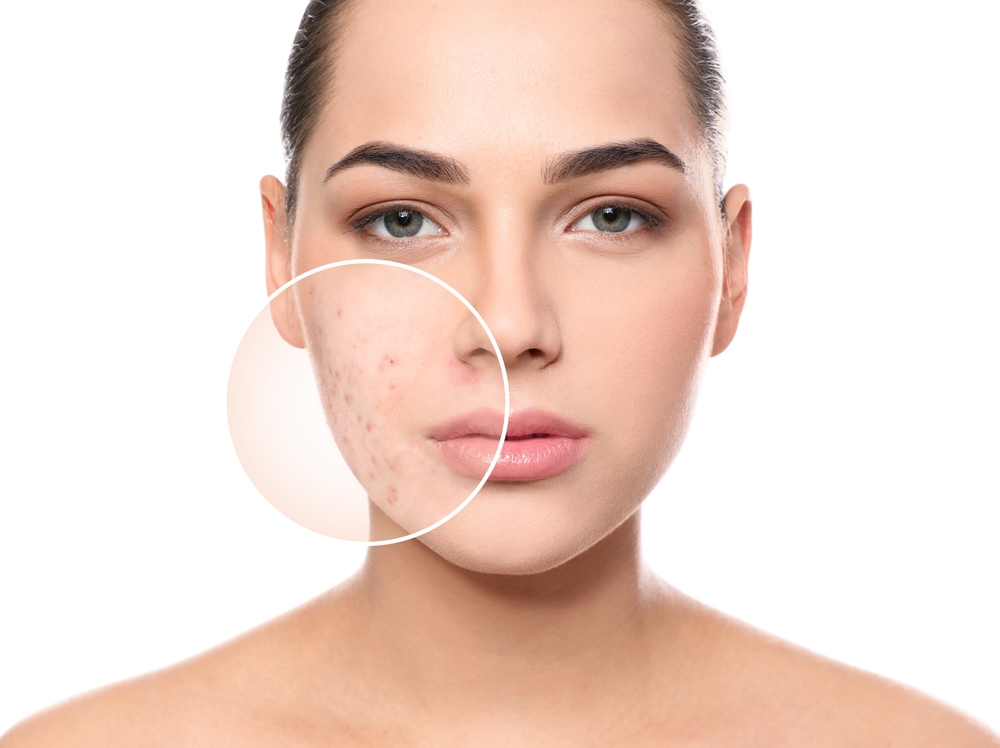
You’ve been on tretinoin for three weeks. Your skin looked fine at first, and now you have more pimples than when you started. You’re wondering if you made a mistake, if this is an allergic reaction, or if you should just stop.
This is the tretinoin purge. It’s real, it’s temporary, and it’s actually a sign that the medication is doing exactly what it’s supposed to do. Here’s what’s happening under the surface, how to tell whether what you’re seeing is a purge or an actual problem, and what to do to get through the next few weeks with your skin (and sanity) intact.
Key takeaways
- The tretinoin purge is real – it’s not a myth or a marketing excuse.
- It happens because tretinoin dramatically speeds up skin cell turnover, pushing clogged pores to the surface faster.
- The purge typically lasts 4-6 weeks, with the worst breakouts peaking around weeks 2-4.
- Not everyone purges – people with more underlying congestion and acne-prone skin are more likely to experience it.
- Purging looks different from a regular breakout: same areas you usually break out, faster-cycling pimples, accompanied by dryness and flaking.
- Stopping tretinoin during the purge means going through it again when you restart.
- The skincare products you add or change can trigger genuine breakouts that look like purging – this distinction matters.
What is the tretinoin purge and why does it happen?
Tretinoin works by accelerating your skin’s cell turnover rate – the cycle of old skin cells dying and new ones forming. Normally this cycle takes about 28 days. Tretinoin can cut that down to roughly 14 days or less.
This acceleration is the mechanism behind every benefit tretinoin delivers: clearer skin, faded pigmentation, smoother texture, reduced fine lines. Faster cell turnover means fresher skin reaches the surface more quickly.
But here’s what happens in the first weeks: all the congestion, clogged pores, and immature comedones that were quietly developing below your skin’s surface suddenly get pushed up and out in a compressed timeframe. Blockages that would have taken weeks to become visible pimples become visible in days. Several at once.
The result is what looks like a sudden breakout – but it isn’t new congestion forming. It’s existing congestion being surfaced and expelled. Your skin is doing what you asked it to do. It’s just doing it all at once.
Who is most likely to experience the tretinoin purge?
Not everyone purges when they start tretinoin. How much you purge depends largely on how much underlying congestion you’re starting with.
People more likely to experience significant purging:
- Those with acne-prone or combination skin
- Anyone with lots of blackheads or clogged pores
- People with oily skin types
- Those who rarely exfoliated before starting tretinoin
If your skin was relatively clear when you started, your purge may be minimal or nonexistent. If you had significant congestion – even congestion that wasn’t visibly active yet – you’re likely to purge more noticeably.
There’s also a concentration factor. Higher-strength tretinoin (0.05%, 0.1%) tends to produce more intense purging than lower concentrations (0.025%). Starting at the lowest effective concentration and building slowly reduces purge severity, which is one reason providers usually start there.
How long does the tretinoin purge last?
The tretinoin purge typically runs 4-6 weeks, though individual timelines vary.
A rough week-by-week picture:
- Weeks 1-2: Skin adjusts. You may notice mild dryness, flaking, or a few extra pimples. Some people sail through this period with minimal reaction.
- Weeks 2-4: The peak purge period for most people. This is when breakouts tend to be most concentrated. It can look alarming if you’re not expecting it.
- Weeks 4-8: Things start calming down. Breakouts reduce in frequency. Skin begins to show signs of what’s coming – improved texture, less oiliness, early clearing.
- Months 2-3: Most purging has resolved. Tretinoin’s real benefits start showing. Many people see significant improvement in overall skin quality during this window.
- Month 3 and beyond: This is what you started tretinoin for. Clearer skin, better texture, reduced pigmentation, fine line improvement.
The important thing to remember: the worst of the purge often happens just before it turns the corner. The week where you’re most tempted to quit is frequently the week right before things improve.
Purging vs breakout – how to tell the difference
This is the question that matters most, because the answer determines whether you should keep going or make changes.
Signs you’re purging normally
- Breakouts appear in your typical problem zones – where you usually get acne
- Individual pimples come and go faster than usual (shorter cycle)
- You’re also experiencing dryness, peeling, or mild redness
- The breakouts started within the first 4-6 weeks of starting tretinoin
- There’s a gradual trend toward improvement after the 4-6 week mark
Signs something else is going on
- New breakouts in places you’ve never broken out before
- No improvement at all after 8-10 weeks of consistent use
- Breakouts getting progressively worse beyond the 6-week mark
- Severe cystic acne that wasn’t your baseline before starting
- Significant burning, stinging, or swelling that isn’t settling
The third scenario worth understanding: product-related breakouts disguised as purging. When people start tretinoin, they often change other products in their routine too – new moisturizers, new SPF, new serums to “support” their skin during the adjustment period. Some of these contain comedogenic (pore-blocking) ingredients that cause actual new breakouts. If you changed multiple things at once, it can be hard to tell what’s causing what.
If you’re unsure which category you’re in, a provider conversation is worth having. A telehealth check-in with Heally can help you figure out whether to stay the course or adjust your approach.
How to reduce purging and get through it more comfortably
The purge can’t be completely eliminated – it’s a function of how tretinoin works. But you can make it shorter and more manageable.
Start slower than you think you need to
The most common reason people experience severe purging is going too hard too fast. If your provider gave you 0.025% and said to use it nightly, but your skin is overwhelmed, cut back to every other night or even twice a week for the first month.
Slower introduction doesn’t eliminate the purge – it spreads it out over more time at a lower intensity. Many people find this more manageable than a concentrated 4-week explosion of breakouts.
Simplify everything else
When you’re starting tretinoin, this is not the time to also try a new vitamin C serum, a new AHA toner, and a new SPF. Strip your routine back to the basics:
- A gentle, non-foaming cleanser
- A barrier-supporting moisturizer with ceramides
- Tretinoin
- SPF (morning only)
That’s it. Add other actives back one at a time, months later, once your skin has stabilized. For guidance on what pairs well with tretinoin and what to keep away from it, see our guide on how to layer tretinoin with other skincare ingredients.
Use the buffer method
If you’re finding tretinoin too intense, apply a thin layer of moisturizer before applying tretinoin, then another layer after. This slows tretinoin’s penetration slightly and reduces irritation meaningfully without eliminating its effectiveness.
Some people find this helpful particularly in the first 4-6 weeks, then gradually reduce or eliminate the pre-moisturizer layer as their skin adjusts.
Protect the barrier aggressively
Tretinoin temporarily compromises your skin barrier. During the purge, your skin is more vulnerable to dryness, sensitivity, and irritation than usual. Fight this with:
- Ceramide-rich moisturizer applied liberally (look for ceramides, fatty acids, and cholesterol)
- Hyaluronic acid serum applied to damp skin before moisturizer
- Avoiding hot showers on your face
- Not over-washing (once daily in the evening is enough for most people while adjusting)
Never skip SPF
Tretinoin makes skin significantly more photosensitive. Unprotected UV exposure during tretinoin treatment can cause hyperpigmentation – particularly bitter given that treating hyperpigmentation is often why people start tretinoin in the first place. Use SPF 30+ every morning, even when you’re not leaving the house.
Don’t pick
This one’s obvious but still gets ignored. Picking at purge breakouts creates post-inflammatory hyperpigmentation (PIH) marks that last for months. Given that tretinoin will eventually clear your skin, leaving PIH marks from picking is actively counterproductive. A clean no-touch rule during the purge pays dividends.
What not to do during the tretinoin purge
- Don’t add more actives. Resist the urge to fix the breakouts with a stronger treatment. Adding AHAs, BHAs, niacinamide serums, benzoyl peroxide, or other actives on top of tretinoin during the purge amplifies irritation without speeding clearing. One active at a time.
- Don’t judge at week 3. Week 3 is statistically the worst time to evaluate whether tretinoin is working for you. You’re at peak purge intensity, you haven’t yet seen the clearing that comes after, and your skin looks worse than it did before you started. Give it the full 8-12 weeks before concluding anything.
- Don’t restart-stop-restart. Every time you stop tretinoin and start again, you reset the adjustment process. You’ll go through the purge again from the beginning. If you genuinely can’t tolerate the current protocol, talk to your provider about a modified approach rather than stopping entirely.
- Don’t switch to over-the-counter retinol. If you’re purging on tretinoin, OTC retinol is not a milder solution to switch to while you wait things out. You’ll just go through a similar adjustment when you eventually go back to tretinoin. The faster path to clear skin is staying consistent with what your provider prescribed.
When to actually stop and call your provider
The purge is uncomfortable but manageable. The following are situations where you should actually contact your provider:
- Severe, painful cystic acne developing in areas where you’ve never had it
- Significant skin cracking, bleeding, or open wounds from dryness
- Eye irritation or sensitivity (product may have migrated)
- No improvement whatsoever after 10-12 weeks of consistent use
- Allergic reaction symptoms: widespread rash, hives, swelling beyond the treated area
A quick check-in is also warranted if you simply can’t tell whether what you’re seeing is purging or an actual problem. That ambiguity is exactly what a provider is useful for.
Conclusion
The tretinoin purge is real, temporary, and – once you’re through it – behind you permanently. It’s not a sign of allergy or a sign that tretinoin isn’t right for you. It’s a sign that your skin is doing accelerated work clearing existing congestion.
The people who get the best results from tretinoin are almost always the ones who stayed consistent through the difficult early weeks. The people who quit during the purge and never see the results are the most common tretinoin regret story.
You don’t have to navigate it alone. If you’re not sure whether what you’re seeing is normal purging, whether your concentration is right, or whether your routine needs adjusting, book a free consultation with Heally – same-day telehealth appointments with licensed providers who can look at your specific situation and give you a concrete answer.
FAQ
Is the tretinoin purge real or just a myth?
It’s real. Tretinoin accelerates cell turnover, which surfaces existing clogged pores and congestion faster than normal. The sudden increase in pimples in the first 4-6 weeks is existing congestion being expelled, not new acne forming. The clinical mechanism is well-established.
How long does the tretinoin purge last?
For most people, the active purge lasts 4-6 weeks. The peak breakout period is usually weeks 2-4. By weeks 6-8, the purge should be tapering and early improvements should start showing. If breakouts are still worsening at week 10, something else may be going on.
How do I know if I’m purging or having a breakout?
Purging looks like breakouts in your usual acne zones, individual pimples cycling faster than normal, accompanied by dryness and flaking, starting within the first 4-6 weeks. A breakout looks like pimples in new locations, no improvement trend after 6-8 weeks, or progressively worsening acne without any clearing.
Does everyone purge on tretinoin?
No. People with more underlying congestion, clogged pores, and acne-prone skin are more likely to purge significantly. People with relatively clear skin may notice little to no purging. Not purging doesn’t mean tretinoin isn’t working.
Can I reduce the purge by using less tretinoin?
Using tretinoin less frequently (every other night or twice weekly to start) can spread the purge out and reduce its intensity in any given week. It doesn’t eliminate purging entirely – it makes the adjustment process more gradual. Many providers recommend this approach for people with sensitive skin.
Should I stop tretinoin if I’m purging badly?
Only if you’re experiencing a reaction that isn’t consistent with purging: severe cystic acne in new locations, no improvement after 10+ weeks, significant skin damage, or allergic symptoms. Normal purging, however uncomfortable, isn’t a reason to stop – and stopping means going through the adjustment again when you restart.
What skincare should I use during the tretinoin purge?
Keep it minimal: gentle non-foaming cleanser, ceramide-rich moisturizer, tretinoin, and SPF. That’s the core routine. Don’t add acids, vitamin C, or other actives during this period. Let your skin adjust to tretinoin first, then reintroduce other products one at a time after 2-3 months.
Can the purge cause permanent scarring?
The purge itself doesn’t cause scarring. Picking at purge breakouts does. The most common purge-related scarring happens from hands-on intervention, not from the pimples themselves. Leaving purge breakouts alone is the most important thing you can do to protect your skin’s long-term appearance.
Related reading on Heally:
- How to layer tretinoin with other skincare ingredients safely
- Can you use tretinoin under your eyes? What the research actually shows
- Tretinoin skin health treatment at Heally
- Glutathione for skin brightening and antioxidant support
Sources
- NIH/PMC – Retinoid-induced flaring in acne vulgaris: does it really exist?
- NIH/NCBI StatPearls – Tretinoin: pharmacology and clinical use
- JAAD – Mechanisms of action of topical retinoids
- Medical News Today – Skin purging vs breakout: what’s the difference?
Medical disclaimer: This article is for informational purposes only and does not replace medical advice. Tretinoin is a prescription medication. Always consult a licensed healthcare provider before starting or changing your skincare routine. Individual results vary.