
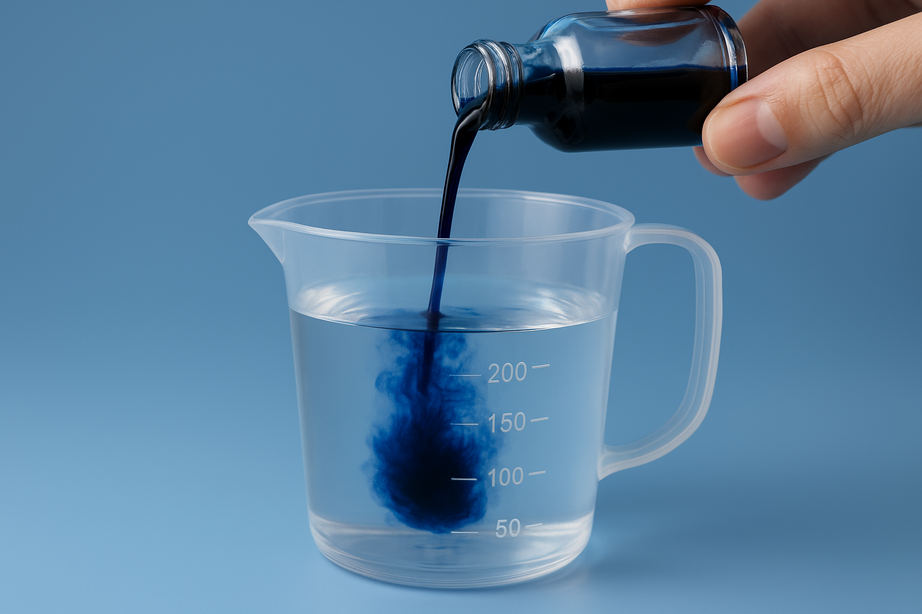
Methylene blue is gaining attention for its potential to boost energy, focus, and cellular health. Originally used as a medical dye and treatment for methemoglobinemia, it’s now being explored in low doses for cognitive and mitochondrial support. Because it’s a potent compound, understanding the right methylene blue dosage and how to take it safely is essential—especially when using oral drops. This guide breaks down how to properly dilute and take methylene blue, avoid common dosing mistakes, and use it safely under professional supervision.
Key takeaways
- Methylene blue is generally considered safe at doses under 2 mg/kg; adverse effects become more likely above ~7 mg/kg.
- For oral wellness use, most protocols target 10–30 mg/day in divided doses — this is not a standardized clinical dose and should be supervised.
- Always use pharmaceutical-grade (USP) methylene blue — never industrial dye or unverified sources.
- Methylene blue must be diluted before oral use; a common approach is 10–20 mL of 0.5% solution into 100–200 mL of water.
- Do not combine with SSRIs, SNRIs, or MAO inhibitors — the risk of serotonin syndrome is real and well-documented.
- People with G6PD deficiency should avoid methylene blue entirely.
- Blue/green urine is expected and not a cause for concern at low doses.
- Always start low, titrate slowly, and monitor under medical supervision.
What is the proper dosage of methylene blue?
Methylene blue is an established drug in certain medical settings (for example, to treat methemoglobinemia), but its use as an oral “drop” supplement is not standardized in clinical practice. Existing safety data gives us guardrails:
-
According to StatPearls, methylene blue is generally safe at therapeutic doses under 2 mg/kg; adverse effects become more likely above ~7 mg/kg.
-
Some reviews and preclinical work suggest that low systemic doses (0.5–4 mg/kg) may activate mitochondrial function safely.
-
The Drugs.com dosing monograph references that, for oral preparations, a 0.5% solution can be diluted for safer administration (e.g. 10–20 mL diluted to 100–200 mL) to reduce gastrointestinal side effects.
From those sources and anecdotal protocols in wellness communities, many users target 10-30 mg total per day in divided doses or microdoses. (This is derived from compounding protocols, not rigorous clinical trials.) CareFirst Specialty Pharmacy
Because individual tolerance, health state, weight, and drug interactions vary greatly, clinicians usually start with a lower amount and titrate upward only under supervision.
Methylene blue oral dosage overview
| Use context | Dose range | Notes |
| General safety threshold | < 2 mg/kg body weight | Per StatPearls; adverse effects more likely above ~7 mg/kg |
| Mitochondrial / cognitive support (research context) | 0.5–4 mg/kg | Preclinical and limited human data; off-label |
| Typical wellness protocol | 10–30 mg/day | Split into 2+ doses; not an FDA-standardized dose |
| Starting dose (new users) | 2–5 mg/day | Begin low; titrate upward slowly under supervision |
| Maximum caution threshold | ~7 mg/kg | Above this, toxicity risk increases substantially |
| Oral dilution for administration | 10–20 mL of 0.5% solution into 100–200 mL water | Reduces GI irritation; yields easier drop dosing |
Methylene blue oral dosage chart
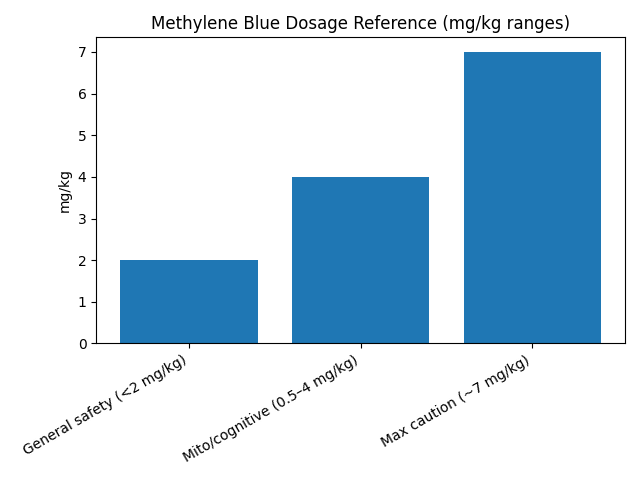
Note: there is no FDA-approved oral dosing protocol for wellness use. The above reflects reported clinical guardrails and common off-label protocols. Always consult a licensed provider to determine the right dose for your weight, health status, and goals.
How to dilute methylene blue for oral use
If using a concentrated methylene blue solution (e.g. 0.5 % or higher), proper dilution is essential to reduce gastrointestinal irritation and ensure safer dosing. Here is a common dilution approach:
-
Obtain pharmaceutical-grade methylene blue (USP grade) — never industrial dye or non-medical sources. (Harvard Health warns that even pharma-grade products may still contain impurities, so confirm purity/third-party testing).
-
Measure, for example, 10–20 mL of a 0.5% stock solution
-
Dilute this into 100–200 mL of sterile water (or filtered water)
-
This yields a weaker solution you can meter by drops
-
Store in a dark, tightly sealed glass (amber) bottle, refrigerated if recommended by the manufacturer
Using a high volume of water helps reduce concentration, which can lessen stomach irritation or dysuria (painful urination) symptoms as noted in clinical dosing references.
Always label your dilution with date, concentration, and total mg per mL to avoid dosing errors.
Best practices for taking methylene blue drops
-
Divide the dose into two or more administrations per day rather than taking all at once
-
Take with a modest amount of food (like a small snack) to buffer stomach lining irritation (many users report GI side effects when taken fully on empty stomach)
-
Avoid combining with serotonergic medications (SSRIs, SNRIs, MAO inhibitors) — methylene blue inhibits MAO-A and can elevate risk of serotonin syndrome in those cases.
-
Monitor urine color — blue/green urine is expected and not harmful at low dosing.
-
Limit exposure to light and heat — methylene blue is light-sensitive; store in dark bottles away from direct sunlight
-
Use a fresh batch or check for precipitation/contamination weekly
Common mistakes to avoid when dosing methylene blue
-
Using non-medical grade blue dye or impure sources — these may contain toxic contaminants. Harvard Health cautions strongly against using industrial dye versions.
-
Overdosing or ignoring weight-based limits — exceeding ~7 mg/kg raises risk of toxicity, methemoglobinemia, hemolysis, or other serious side effects.
-
Combining with serotonergic drugs without oversight — this is a well-documented risk.
-
Using in G6PD deficiency — methylene blue can trigger hemolysis in G6PD deficiency (a known risk).
-
Skipping titration or abrupt increases — always increase slowly and monitor for side effects
-
Ignoring renal or hepatic impairments — methylene blue clearance may be altered in these conditions.
How long does it take for methylene blue to work?
Onset and subjective effects vary greatly depending on dose, formulation, and individual pharmacokinetics:
-
In imaging and swallowing studies, small oral amounts used as dye exhibit minimal adverse effects — suggesting absorption is relatively quick at low levels.
-
Some low-dose human and animal studies on mitochondrial support show measurable changes (e.g., oxygen consumption, brain glucose uptake) within hours.
-
In wellness communities, anecdotal reports often describe perceptual changes in alertness or mood within 30–60 minutes after ingestion (though this is not clinical evidence)
Expect that any noticeable effects likely emerge within 1 to 2 hours, though subtler biochemical changes may occur earlier.
When to stop taking methylene blue and seek medical attention
Because methylene blue is a potent compound, certain symptoms signal you should stop immediately and contact a healthcare provider:
- Difficulty breathing or chest tightness — may indicate methemoglobinemia at higher doses
- Rapid or irregular heartbeat
- Extreme dizziness or confusion
- Yellowing of the skin or eyes (jaundice) — possible sign of hemolysis, particularly in those with undiagnosed G6PD deficiency
- Dark brown or black urine — distinct from the expected blue/green; may indicate hemolysis
- Symptoms of serotonin syndrome: agitation, rapid heart rate, high blood pressure, muscle twitching, sweating, fever — especially if you take any serotonergic medication
- Severe nausea, vomiting, or abdominal pain — may reflect GI toxicity at higher doses
If you experience any of the above, stop use, do not increase your dose, and contact your provider or seek emergency care as appropriate.
Final words & safety reminder
Oral methylene blue dosing is not well standardized and remains in the realm of experimental or off-label use. While low doses appear safer, the risks — particularly drug interactions, purity issues, and overdose — require careful oversight.
If you’re considering methylene blue use, it’s vital to:
-
Work with a medical provider familiar with its pharmacology
-
Start very low and titrate slowly
-
Monitor biomarkers (methemoglobin levels, liver/renal function, etc.)
-
Stop immediately if you experience symptoms like dizziness, chest pain, unusual fatigue, or hemolysis
At Heally, our licensed clinicians can safely guide you through your Methylene Blue journey. Schedule a free consultation today to get started.
Frequently Asked Questions about oral methylene blue
What is the correct oral dose of methylene blue?
There is no single FDA-approved dose for oral wellness use. Most supervised protocols start at 2–5 mg/day and may gradually increase up to 10–30 mg/day depending on body weight, tolerance, and goals. The established safety ceiling is roughly 2 mg/kg; risks rise significantly above 7 mg/kg.
Can I take methylene blue drops without diluting them?
It is not recommended. Concentrated methylene blue solutions (0.5% or higher) can irritate the stomach and GI tract. Diluting 10–20 mL of stock solution into 100–200 mL of water significantly reduces this risk and makes dosing more precise.
How do I know what concentration my methylene blue solution is?
The concentration should be listed on the label of pharmaceutical-grade products (e.g., “0.5% methylene blue solution”). Always purchase from a verified source and confirm purity through third-party testing. If the label doesn’t specify concentration, do not use it.
Why does methylene blue turn my urine blue or green?
This is a normal and expected effect at low doses. Methylene blue is excreted through the kidneys, which causes the temporary discoloration. It is not harmful. However, if urine becomes dark brown or black, that is a different and potentially serious sign — stop use and consult your provider.
Can I take methylene blue if I’m on antidepressants?
No — not without explicit medical clearance. Methylene blue inhibits MAO-A and can trigger serotonin syndrome when combined with SSRIs, SNRIs, tricyclic antidepressants, or other serotonergic drugs. The FDA has issued a formal safety communication on this interaction.
How often should I take methylene blue?
Most protocols divide the daily dose into two administrations (e.g., morning and midday) rather than a single dose. This helps maintain more stable levels and reduces GI side effects. Avoid taking it late in the day, as some users report it may affect sleep.
Is methylene blue safe long-term?
Long-term safety data for oral wellness use is limited. This is an off-label, experimental use of an established medical compound. Monitoring biomarkers (liver function, kidney function, methemoglobin levels) periodically is advisable if using on an ongoing basis. Work with a provider who can track your response over time.
What is the difference between pharmaceutical-grade and industrial methylene blue?
Pharmaceutical-grade (USP) methylene blue is manufactured to strict purity standards for human use. Industrial methylene blue — sold for aquariums, fabric dyeing, or lab use — may contain heavy metals, solvents, and other contaminants that are toxic when ingested. Never use non-USP sources.
Who should not take methylene blue?
People who should avoid methylene blue include those with G6PD deficiency, a history of serotonin syndrome, current use of serotonergic medications, pregnancy or breastfeeding, and severe renal or hepatic impairment. A licensed provider can help assess whether you are a suitable candidate.
Sources
-
- PubMed Central: Methylene blue modulates functional connectivity in the human brain
- Harvard Health Publishing: What to know about methylene blue
- Frontiers in Cellular Neuroscience: Protection against neurodegeneration with low-dose methylene blue and near-infrared light
- Springer Nature Link: Evaluating the safety of oral methylene blue during swallowing assessment: a systematic review
- PubMed Central: Methylene blue: a controversial diagnostic acid and medication?
- U.S. Food and Drug Administration: FDA Drug Safety Communication: Serious CNS reactions possible when methylene blue is given to patients taking certain psychiatric medications
- Drugs: Methylene Blue Dosage
- NIH StatPearls: Methylene Blue
- BRC Healthcare: Methylene Blue Dosage Chart: Accurate Guidelines for Safe Administration
- GoodRx: Methylene Blue – Generic ProvayBlue
- ScienceDirect – ELSEVIER: Pharmacokinetics of Highly Ionized Drugs II: Methylene Blue—Absorption, Metabolism, and Excretion in Man and Dog after Oral Administration
- FDA Label: HIGHLIGHTS OF PRESCRIBING INFORMATION PROVAYBLUE® (methylene blue) injection USP, for intravenous use Initial U.S. Approval: 2016
- FDA Access Data: ProvayBlue/methylene blue SUMMARY REVIEW
Medical Disclaimer
This content is for educational purposes only and should not be taken as medical advice, diagnosis, or treatment recommendation. Information about prescriptions and therapies is provided for general understanding and may not apply to individual situations. Always consult a qualified healthcare provider before making decisions about testing, treatment, or lifestyle changes that could affect your health.
Important Note
FDA-approved medications and diagnostic tools discussed in this article have specific indications, dosing, and monitoring requirements. Off-label uses or unregulated supplements may carry additional safety, quality, and effectiveness risks. Never start, stop, or change any medical regimen without guidance from a licensed clinician who can consider your full medical history and current health status.