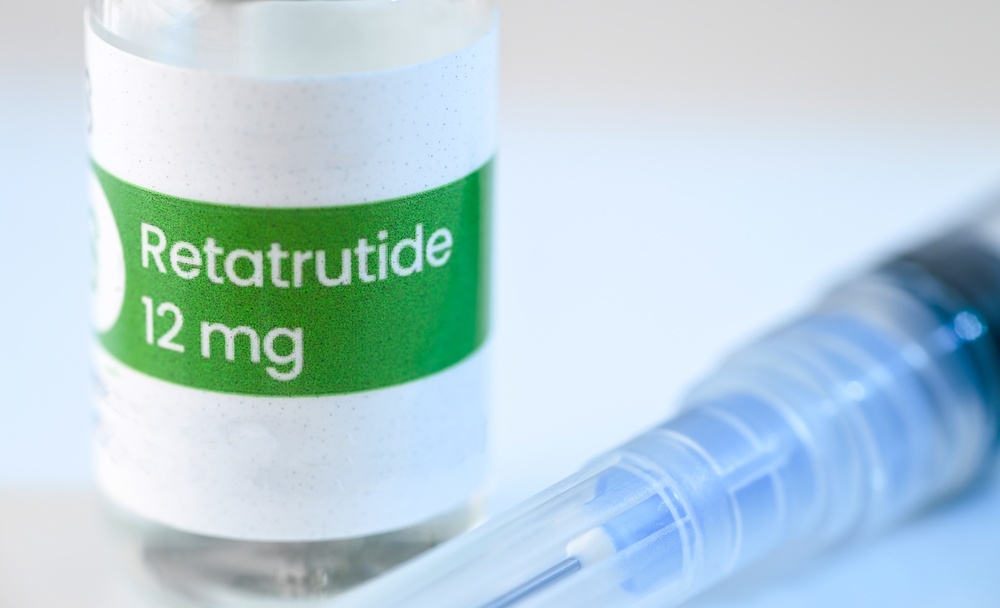
Retatrutide is an investigational weight loss drug that produced 28.3% average weight loss in its pivotal Phase 3 trial — the highest ever recorded for a single obesity medication. Eli Lilly makes it. The FDA has not approved it yet. With a likely NDA filing in Q4 2026, retatrutide could reach US patients in early-to-mid 2028. This guide covers what the trials confirmed, how the drug works, how it compares to approved GLP-1 medications, and what the realistic timeline looks like.
Key takeaways
- Retatrutide is a triple hormone agonist: it activates GLP-1, GIP, and glucagon receptors simultaneously.
- The TRIUMPH-1 trial confirmed 28.3% average weight loss at 80 weeks in 2,339 adults without diabetes.
- The TRIUMPH-4 trial confirmed 28.7% weight loss in adults with obesity and knee osteoarthritis.
- The TRANSCEND-T2D-1 trial (diabetes-specific) confirmed 16.8% weight loss and −2.0% HbA1c reduction at 40 weeks.
- The most distinctive side effect is dysesthesia (skin tingling), affecting up to 20.9% of patients at the highest dose.
- Eli Lilly plans to file a New Drug Application (NDA) in Q4 2026.
- The FDA is expected to approve retatrutide in late 2027, with US market launch in early-to-mid 2028.
- Retatrutide is not yet available. Patients who qualify now should consider semaglutide or tirzepatide.
What is retatrutide?
Retatrutide (LY3437943) is a first-in-class triple hormone receptor agonist developed by Eli Lilly. No other approved drug works exactly the same way. It targets three receptors at once:
- GLP-1 — slows stomach emptying and suppresses appetite. This is the same mechanism as semaglutide (Wegovy, Ozempic).
- GIP — boosts insulin secretion and works synergistically with GLP-1. This is the second mechanism that makes tirzepatide (Zepbound) more effective than semaglutide alone.
- Glucagon — retatrutide’s unique third mechanism. It raises energy expenditure and accelerates fat oxidation. No approved GLP-1 drug currently does this.
The glucagon activation is what sets retatrutide apart. It helps the body burn more fat, not just eat less. This partly explains why the weight loss numbers are higher than either semaglutide or tirzepatide.
How approved drugs compare:
| Drug | Mechanism | Average weight loss |
|---|---|---|
| Semaglutide (Wegovy) | GLP-1 only | 14.9% |
| Tirzepatide (Zepbound) | GLP-1 + GIP | 22.5% |
| Retatrutide | GLP-1 + GIP + Glucagon | 28.3–28.7% |
Phase 3 results: what the trials confirmed
Eli Lilly runs two separate Phase 3 programs for retatrutide: TRIUMPH (obesity-focused) and TRANSCEND-T2D (diabetes-focused). As of mid-2026, three trials have reported results.
TRIUMPH-1 — the pivotal obesity trial (complete)
Results confirmed: May 21, 2026. 2,339 adults without type 2 diabetes, randomized to 4 mg, 9 mg, or 12 mg retatrutide or placebo for 80 weeks.
At the 12 mg dose:
- 28.3% average weight loss (about 70 lbs)
- 45.3% of patients lost 30% or more of their body weight
- 65.3% of patients dropped below a BMI of 30
- Patients with baseline BMI ≥35 who stayed for 104 weeks lost 30.3% on average (85 lbs), with no plateau in sight
- Discontinuation due to side effects: 11.3% at 12 mg vs. 4.9% for placebo
TRIUMPH-1 also includes a nested sleep apnea substudy. Presented at ADA on June 6, 2026, it showed a 60.6% reduction in AHI (a measure of sleep apnea severity) from a severe baseline.
TRIUMPH-4 — obesity with knee osteoarthritis (complete)
Results announced: December 2025. 445 participants with obesity and knee osteoarthritis, without diabetes, over 68 weeks.
At 12 mg:
- 28.7% average weight loss
- Significant improvement in WOMAC pain scores — more than 1 in 8 patients became completely free of knee pain
- Dysesthesia (tingling, altered skin sensation) in 20.9% of patients at 12 mg vs. 0.7% placebo — the most notable side effect
TRANSCEND-T2D-1 — diabetes-specific track (complete)
Topline: March 19, 2026. Published in The Lancet: June 2026. 537 patients with type 2 diabetes (85% treatment-naive) at 40 weeks.
- 16.8% average weight loss at 12 mg
- −2.0% HbA1c reduction at 12 mg
- Discontinuation due to side effects: 5.1% at 12 mg — notably lower than the obesity-only TRIUMPH trials
- Dysesthesia also lower in this population
The lower side-effect rate in the diabetes population is not fully explained yet. It may relate to population differences or shorter trial duration.
Trials still pending
Two core obesity trials are still running:
- TRIUMPH-2 (obesity + type 2 diabetes) — results expected later 2026
- TRIUMPH-3 (obesity + established cardiovascular disease) — results expected later 2026
A separate cardiovascular outcomes trial, TRIUMPH-Outcomes (~10,000 patients), is not required for the initial obesity NDA and won’t report until 2028–2029.
Already on a GLP-1? If you’re currently taking semaglutide or tirzepatide and want to understand how retatrutide compares, see our guide to retatrutide vs tirzepatide vs semaglutide.
FDA approval timeline
Where things stand in 2026
| Milestone | Status |
|---|---|
| TRIUMPH-1 (pivotal obesity) | ✅ Complete |
| TRIUMPH-4 (osteoarthritis substudy) | ✅ Complete |
| TRANSCEND-T2D-1 (diabetes) | ✅ Complete |
| TRIUMPH-2 and TRIUMPH-3 | ⏳ Results expected late 2026 |
| NDA submission | ⏳ Expected Q4 2026 |
| FDA review | ⏳ 10–12 months after filing |
| FDA approval | ⏳ Expected late 2027 |
| US market launch | ⏳ Estimated Q1–Q2 2028 |
What happens at each stage
NDA filing (Q4 2026). Eli Lilly will anchor the submission on TRIUMPH-1 data, with TRIUMPH-4 as supportive evidence. The FDA will assess safety across the full trial database.
FDA review (10–12 months). Standard review is 10 months. The FDA could grant priority review (6 months) given obesity’s unmet clinical need. Key questions will include the dysesthesia signal and the final indication language — which BMI thresholds and comorbidities will qualify.
Approval (late 2027). If the NDA files Q4 2026 and standard review applies, expect an FDA decision around Q4 2027. Priority review puts it at Q2–Q3 2027.
Launch (Q1–Q2 2028). Commercial launch typically follows FDA approval by 1–3 months for manufacturing and distribution setup. Supply constraints are likely in the first weeks post-launch, similar to early Wegovy and Zepbound shortages.
Safety profile
Retatrutide’s most common side effects match what patients experience on semaglutide and tirzepatide: nausea, diarrhea, vomiting, and constipation. These peak during dose escalation and ease over time.
The unique signal is dysesthesia — tingling, numbness, or altered skin sensation. This rarely occurs with semaglutide or tirzepatide. It appears in 8.8–20.9% of retatrutide patients at the 9–12 mg dose.
Discontinuation rates across trials:
| Trial | Discontinuation at 12 mg |
|---|---|
| TRIUMPH-4 (osteoarthritis) | 18.2% |
| TRIUMPH-1 (general obesity) | 11.3% |
| TRANSCEND-T2D-1 (diabetes) | 5.1% |
| Tirzepatide (Zepbound, SURMOUNT-1) | 6.2% |
| Semaglutide (Wegovy, STEP 1) | 6.9% |
Retatrutide’s discontinuation rate in the general obesity population (11.3%) is higher than its approved competitors. The diabetes-specific TRANSCEND-T2D-1 population tolerated it better (5.1%). This will be a central focus of the FDA review.
Expected contraindications will mirror current GLP-1 drugs: personal or family history of medullary thyroid carcinoma (MTC), Multiple Endocrine Neoplasia type 2 (MEN 2), active pregnancy, or severe pancreatitis history.
Who will be eligible for retatrutide?
Based on current trial populations and how the FDA has handled semaglutide and tirzepatide approvals, expected eligibility criteria are:
- BMI ≥30, or
- BMI ≥27 with at least one weight-related condition (type 2 diabetes, hypertension, dyslipidemia, OSA)
- Adults 18 and older
- Not pregnant or breastfeeding
- No history of MTC or MEN 2
Retatrutide will almost certainly launch at a high price point — estimates suggest $1,200–$1,500 per month at list price. Coverage will likely require documentation of prior lifestyle intervention or failure on existing GLP-1 medications first.
What you should do right now
Retatrutide won’t be available until at least early 2028. If you’re dealing with obesity or type 2 diabetes today, don’t wait.
- Semaglutide (Wegovy, Ozempic) produces 14.9% average weight loss and has the broadest FDA-approved indications, including cardiovascular risk reduction. See our semaglutide guide.
- Tirzepatide (Zepbound, Mounjaro) produces 22.5% average weight loss and is the closest approved analog to retatrutide’s efficacy level. See our tirzepatide guide.
Both are available now through a telehealth consultation. Book a free consultation with Heally to get a prescription delivered to your door.
If you want to understand how these drugs compare before deciding, read our tirzepatide vs semaglutide comparison.
Conclusion
Retatrutide is the most effective weight loss drug tested in large-scale Phase 3 trials. The 28.3–28.7% average weight loss in TRIUMPH-1 and TRIUMPH-4, and the −2.0% HbA1c with 16.8% weight loss in TRANSCEND-T2D-1, are results no approved drug has matched. The FDA pathway is on track — NDA by Q4 2026, approval by late 2027, launch in early 2028.
The trade-off is tolerability. Dysesthesia in up to 20.9% of patients and an 11.3% discontinuation rate in the general obesity population are real clinical concerns the FDA will weigh carefully. How the agency balances efficacy against that safety signal will determine the final indication and prescribing guidance.
For patients in 2026, the right move is to use what’s available now. Semaglutide and tirzepatide are both proven, accessible, and covered by more insurance plans each year. Talk to a Heally provider today about which GLP-1 medication fits your current goals — and follow this space as retatrutide’s approval timeline unfolds.
FAQ
What is retatrutide?
Retatrutide is an investigational triple hormone agonist made by Eli Lilly. It activates GLP-1, GIP, and glucagon receptors simultaneously. It is not FDA-approved. Phase 3 trials show 28.3–28.7% average weight loss — higher than any currently approved obesity medication.
When will retatrutide be available?
Retatrutide is not yet available. Eli Lilly plans to file a New Drug Application with the FDA in Q4 2026. FDA review takes 10–12 months, putting likely approval at late 2027 and US market launch at early-to-mid 2028.
How does retatrutide compare to Wegovy and Zepbound?
Retatrutide produced 28.3–28.7% average weight loss in Phase 3. Tirzepatide (Zepbound) produces 22.5%, and semaglutide (Wegovy) produces 14.9%. Retatrutide has not been approved yet — the comparison is between trial data for different drugs.
What are the side effects of retatrutide?
Common side effects are similar to GLP-1 drugs: nausea, vomiting, diarrhea, and constipation. The unique side effect is dysesthesia — tingling or altered skin sensation — affecting up to 20.9% of patients at the highest dose.
Who will be eligible for retatrutide?
Expected eligibility mirrors current GLP-1 approvals: BMI ≥30, or BMI ≥27 with a weight-related condition. Contraindications will likely include a history of medullary thyroid cancer or MEN 2 syndrome, and pregnancy.
How much will retatrutide cost?
Estimates project a list price of $1,200–$1,500 per month. Eli Lilly is expected to launch patient assistance programs. Insurance coverage terms are unknown until the drug approaches approval.
Does retatrutide help with type 2 diabetes?
Yes. The TRANSCEND-T2D-1 trial showed a −2.0% HbA1c reduction and 16.8% weight loss in 537 patients with type 2 diabetes over 40 weeks. A dedicated diabetes NDA filing is expected to follow the obesity NDA.
Can I use retatrutide now while it’s in trials?
No. Retatrutide is only available through participation in clinical trials. It is investigational and not approved for public use. Patients who qualify for obesity treatment now can access semaglutide or tirzepatide through a licensed provider.
Sources
- Eli Lilly press release — TRIUMPH-1 Phase 3 topline results, May 21, 2026
- Eli Lilly press release — TRIUMPH-4 Phase 3 trial results, December 2025
- Eli Lilly press release — TRANSCEND-T2D-1 topline results, March 19, 2026
- Bajaj HS et al. — TRANSCEND-T2D-1 full publication, The Lancet, June 2026
- Giblin K et al. — TRIUMPH program design paper, Diabetes, Obesity and Metabolism, 2026
- Jastreboff AM et al. — Triple-Hormone-Receptor Agonist Retatrutide for Obesity — Phase 2, NEJM, 2023
- ClinicalTrials.gov — TRIUMPH-1 (NCT05929066), TRIUMPH-2 (NCT05929079), TRIUMPH-3 (NCT05882045), TRIUMPH-4 (NCT05931367)
- FDA — Wegovy prescribing information, 2025
- FDA — Zepbound (tirzepatide) prescribing information, 2024
Medical disclaimer: This article is for informational purposes only. Retatrutide is investigational and not FDA-approved. It is not available to patients outside of clinical trials. Always consult a licensed healthcare provider before starting, stopping, or changing any prescription medication.