

Zepbound (tirzepatide) is one of the most clinically effective weight loss medications available today, with trial participants losing an average of about 20% of their body weight over 72 weeks. But that result doesn’t come from taking the highest dose as fast as possible – it comes from following a structured titration schedule that lets your body adapt at every step. Here’s exactly how that schedule works, what to expect at each stage, and how to handle common real-world situations like plateaus, intolerability, and missed injections.
Key takeaways
- Every patient starts Zepbound at 2.5 mg/week regardless of weight or goals
- Doses increase by 2.5 mg every four weeks or more, based on how well you’re tolerating the medication
- The ceiling dose is 15 mg/week; most people settle somewhere between 5 mg and 10 mg long-term
- Missing Zepbound injection by more than four days? Skip it entirely and resume your regular schedule
- There is no single “right” dose. The target is wherever your results and side effects reach a workable balance
The complete Zepbound dosing schedule
Zepbound comes as a pre-filled, single-dose auto-injector pen. All six available strengths deliver 0.5 ml of solution – only the concentration of tirzepatide changes.
| Week | Dose | Notes |
| Weeks 1–4 | 2.5 mg | Starting dose; tolerance-building only |
| Weeks 5–8 | 5 mg | First therapeutic increase |
| Weeks 9–12 | 7.5 mg | Continue if tolerating well |
| Weeks 13–16 | 10 mg | Common long-term stopping point |
| Weeks 17–20 | 12.5 mg | Step toward maximum if needed |
| Week 21+ | 15 mg | Ceiling dose; highest FDA-approved strength |
Zepbound’s 4 weeks rule
As you can see in the table, you stay on each Zepbound dose for at least four weeks before increasing. This is an official Zepbound dosing schedule rule to make the weight loss process safer for you. If you still have nausea or stomach side effects, your provider may keep you on the same dose for 6–8 weeks. That’s normal, it just means your body needs more time before moving to a higher dose.
Zepbound dosing chart
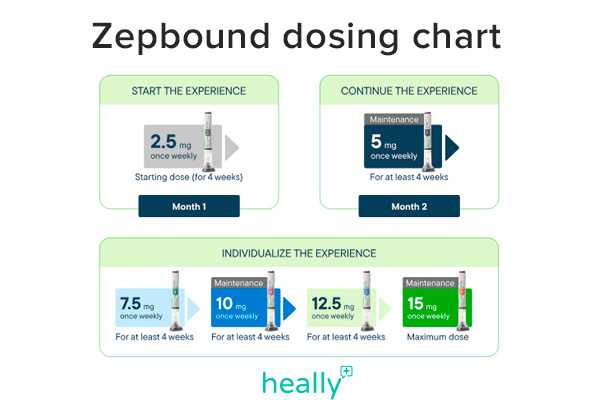
Your first dose of Zepbound: what to expect at 2.5 mg
The introductory injection at 2.5 mg is purely about tolerability, not weight loss. Most patients notice little appetite suppression and minimal scale change in weeks one through four. That’s expected and completely normal.
What you should pay attention to during this phase is how your stomach responds. Mild nausea, looser stools, or reduced appetite after eating are common and typically fade within a few days of each injection. Staying well-hydrated and eating smaller, lower-fat meals makes the adjustment considerably easier.
Think of 2.5 mg as the on-ramp. Skipping Zepbound starting dose in favor of a faster start is one of the most reliable ways to end up vomiting for three days and abandoning treatment altogether.
The average Zepbound dose most patients land on
Real-world prescribing data and clinical trial results both point to 5–10 mg as the range where most patients find their long-term balance. SURMOUNT-1 trial data gives a clear picture of what each dose level actually delivers:
| Dose | Average body weight reduction (72 weeks) |
| 5 mg/week | ~16% |
| 10 mg/week | ~21.4% |
| 15 mg/week | ~22.5% |
The gap between 10 mg and 15 mg is about one percentage point of additional body weight. For some patients that’s meaningful; for others the trade-off in side effects isn’t worth it. A provider who knows your history will help you make that call. You can also read more about which Zepbound dose is most effective to understand the full picture before your next appointment.
The maximum Zepbound dose (15 mg)
The 15 mg weekly injection is the highest FDA-approved strength for chronic weight management. It produced the greatest fat reduction in clinical trials but also carries the highest rate of gastrointestinal side effects, particularly nausea and vomiting in the weeks after each increase.
Reaching the highest Zepbound dose of 15 mg makes sense when lower therapeutic doses have stopped producing results after several months at a stable level. It is not a starting point, and no reputable provider will put you there on week one. If you’re currently at 12.5 mg and considering the jump, discuss when to increase your Zepbound dose with your prescriber rather than making that call independently.
Maintenance Zepbound dose where you stay long-term
Once your weight loss stabilizes and your side effects are at a level you can live with, you’ve found your maintenance dose. There is no universal number: some patients maintain successfully at 5 mg for years, while others genuinely need 10 mg or 15 mg to hold their results.
As of 2026, updated clinical guidance is increasingly clear that tirzepatide should be considered a long-term or indefinite treatment for most people, not a short course you eventually taper off. Studies show that patients who discontinue the medication regain a substantial portion of lost weight within a year. Staying on your maintenance dose, even after reaching your goal weight, is part of the treatment strategy – not a sign that something went wrong.
What to do if you miss Zepbound dose
Missing a weekly injection happens. Here’s the simple rule:
- Missed by 4 days or fewer: take the injection as soon as you remember, then resume your normal weekly day going forward.
- Missed Zepbound by more than 4 days: skip that dose entirely. Resume on your originally scheduled day the following week.
- Never take two injections to make up for a missed one. Doubling up significantly increases your risk of severe nausea and vomiting.
If you find yourself consistently forgetting injections, a phone alarm set to the same day and time each week is one of the simplest and most effective tools for protecting your progress. Tirzepatide levels drop between doses, and frequent gaps will blunt your appetite suppression noticeably.
When to slow down or hold your Zepbound dose
Zepbound titration schedule is a guide, not a rigid contract. There are two situations where holding at your current level (or even stepping back) makes clinical sense.
If side effects are significant and persistent, continuing to increase puts you at risk of stopping treatment altogether. Providers can hold you at an intermediate dose for as long as needed. Learning to manage Zepbound side effects proactively – smaller meals, avoiding high-fat foods, staying hydrated – often makes the difference between getting through the early weeks and giving up.
If you’ve reached a dose that’s producing consistent weight loss with tolerable side effects, there may be no clinical reason to keep increasing. Reaching 15 mg is not a goal in itself. Reaching and sustaining a healthy weight is.
Conclusion: choosing the right Zepbound dose for long-term results
Weight loss medication dosing is not about getting to the highest number — it’s about finding the right Zepbound dose your body can tolerate while still delivering consistent weight loss. The structured titration schedule exists to reduce side effects, improve adherence, and help you stay on treatment long enough to see real results.
Most patients don’t need the maximum Zepbound dosage to succeed. In practice, the best outcomes come from staying consistent, adjusting slowly, and working with your provider to find your personal balance between effectiveness and tolerability.
Here’s a simple breakdown of how each stage of the titration schedule fits together:
| Dose stage | Zepbound dose | Purpose | What to expect |
| First dose Zepbound | 2.5 mg/week | Starting dose for tolerance | Minimal weight loss, body adjusting |
| Average Zepbound dose | 5–10 mg/week | Main fat loss range | Strong appetite suppression, steady results |
| Maximum Zepbound dose | 15 mg/week | Highest FDA-approved dose | Slightly higher weight loss, more side effects |
| Maintenance Zepbound dose | 5–15 mg/week | Long-term weight control | Weight stabilization, ongoing treatment |
The key idea is simple: your maintenance Zepbound dose is your real goal, not the maximum. Once you reach a level where weight loss is stable and side effects are manageable, that’s where long-term success happens.
Looking for a provider to guide your Zepbound titration? Schedule a virtual consultation with Heally – our licensed prescribers specialize in GLP-1 weight management and will build a dosing plan around your specific tolerance and goals.
FAQ
Can I skip the 2.5 mg starting dose if I want faster results?
No. The starting dose is set by Eli Lilly’s approved prescribing protocol, and any provider dispensing Zepbound correctly will begin there. Skipping it dramatically increases GI side effects and often leads patients to quit entirely.
What if I can’t tolerate increasing past 5 mg?
Staying at 5 mg is a legitimate long-term therapeutic approach. Patients on 5 mg still averaged around 16% body weight reduction in trials – that’s a meaningful outcome. Some providers also use extended time at intermediate doses like 7.5 mg before advancing.
How long does it take to see real results?
Appetite changes often appear in weeks two through four. Meaningful weight reduction on the scale typically starts by weeks eight to twelve, with the most significant progress happening as you move through the higher dose levels.
Does the dosing schedule differ for sleep apnea vs weight loss?
Zepbound was also FDA-approved in 2024 for moderate-to-severe obstructive sleep apnea in adults with obesity. The titration schedule is identical, but your provider will monitor different outcomes markers alongside weight.
Is Zepbound the same medication as Mounjaro?
Both contain tirzepatide, but they carry different FDA approvals. Mounjaro is indicated for type 2 diabetes management; Zepbound is approved for chronic weight management. Your prescriber will recommend whichever is appropriate for your diagnosis and goals.
Can I get Zepbound online?
Yes. Heally connects you with licensed providers for virtual consultations and delivers FDA-approved prescriptions directly to your door. You can explore GLP-1 weight loss options or schedule a consultation to get started.
Sources
- Jastreboff AM et al. “Tirzepatide Once Weekly for the Treatment of Obesity.” New England Journal of Medicine, 2022. nejm.org
- Eli Lilly. “Your Weekly Zepbound Routine.” zepbound.lilly.com
- MedicalNewsToday. “Zepbound Dosage Guide and Schedule.” medicalnewstoday.com
- WebMD. “How Zepbound Works for Weight Loss.” webmd.com
Medical disclaimer
This article is for informational purposes only and does not constitute medical advice. Speak with a licensed healthcare provider before starting any prescription medication