
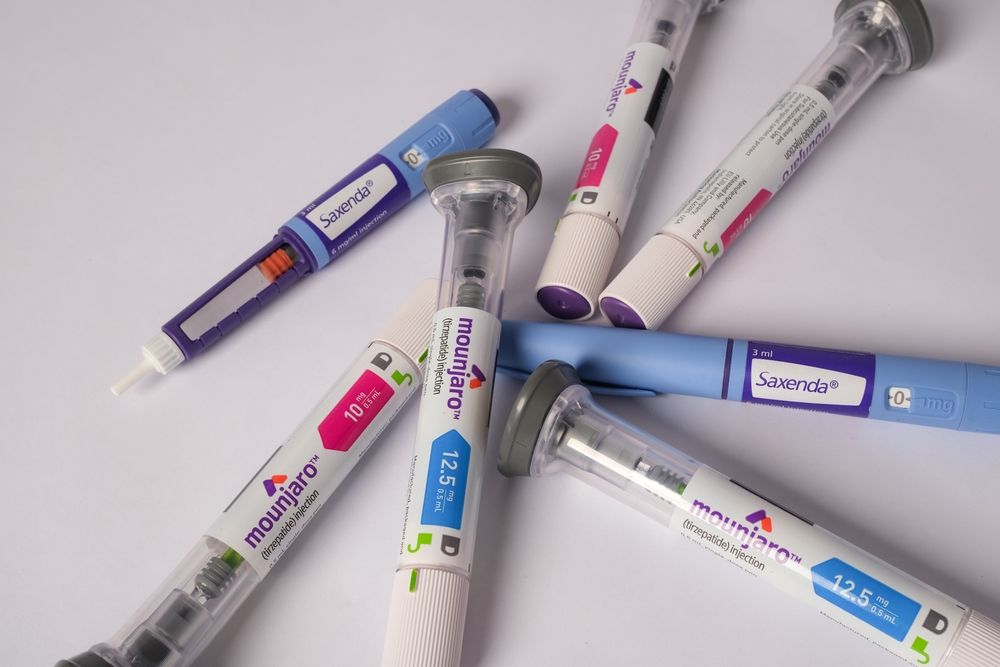
The core difference is simple: semaglutide activates one gut hormone receptor (GLP-1), while tirzepatide activates two (GLP-1 and GIP). That single-versus-dual distinction is why they’re related but not identical drugs – and why each shows up under several different brand names. This guide explains what each one actually is, how they work, and the forms they come in. For the head-to-head decision – which works better, what they cost, and who should pick which – see our detailed comparison linked throughout.
Key takeaways
- Semaglutide is a single GLP-1 receptor agonist; tirzepatide is a dual GLP-1 and GIP agonist
- Semaglutide is sold as Ozempic, Wegovy, and Rybelsus; tirzepatide as Mounjaro and Zepbound
- The brand name signals the approved use, not a different drug – same molecule inside each family
- Semaglutide comes as a weekly injection or a daily pill; tirzepatide is a weekly injection only
- Both are taken once weekly by injection for weight loss, using prefilled pens
- For efficacy, cost, and which to choose, see our dedicated comparison articles
What are tirzepatide and semaglutide?
Both are medications in the GLP-1 class, used for type 2 diabetes and weight management. They mimic natural gut hormones that control appetite, fullness, and blood sugar. That shared foundation is why they get compared so often – and why people mix them up.
But they aren’t the same drug. Semaglutide came first, approved for diabetes in 2017 and weight management in 2021. Tirzepatide arrived later, approved for diabetes in 2022 and weight management in 2023, and it was designed with an extra mechanism that semaglutide doesn’t have.
Explore the options: semaglutide · tirzepatide · weight loss prescriptions
The core difference: single vs dual hormone action
This is the distinction that matters most, and it’s worth understanding properly.
Semaglutide acts on one receptor: GLP-1 (glucagon-like peptide-1). GLP-1 is a hormone your gut releases after eating. It tells your brain you’re full, slows how fast your stomach empties, and helps regulate blood sugar. Semaglutide mimics that single signal.
Tirzepatide acts on two receptors: GLP-1 and GIP (glucose-dependent insulinotropic polypeptide). GIP is a second gut hormone involved in how your body handles energy and insulin. By activating both pathways at once, tirzepatide is often called a “dual agonist” or “twincretin.”
The practical upshot of that second mechanism – how it affects weight loss results and side effects – is covered in our tirzepatide vs semaglutide dosage and weight loss comparison. Here, the key point is conceptual: one drug pulls one lever, the other pulls two.
The brand names explained: why one drug has several names
This is where most of the confusion comes from. Each drug exists under multiple brand names, and the name tells you the approved use, not a different medicine.
| Active drug | Brand name | Approved for | Form |
|---|---|---|---|
| Semaglutide | Ozempic | Type 2 diabetes | Weekly injection |
| Semaglutide | Wegovy | Weight management | Weekly injection |
| Semaglutide | Rybelsus | Type 2 diabetes | Daily pill |
| Tirzepatide | Mounjaro | Type 2 diabetes | Weekly injection |
| Tirzepatide | Zepbound | Weight management | Weekly injection |
So Ozempic and Wegovy contain the exact same drug – semaglutide – just approved and dosed for different purposes. The same is true for Mounjaro and Zepbound with tirzepatide. When someone asks “Ozempic vs Mounjaro,” they’re really asking “semaglutide vs tirzepatide.” Knowing this saves a lot of confusion when you talk to a provider or pharmacist.
Forms and administration: injection vs pill
Here’s a practical difference that often gets overlooked. Semaglutide is more flexible in how you can take it:
- Semaglutide comes as a once-weekly injection (Ozempic, Wegovy) or a once-daily pill (Rybelsus, and now an oral form of Wegovy). The pill option appeals to people who prefer to avoid needles.
- Tirzepatide is injection only, taken once weekly (Mounjaro, Zepbound). There’s no oral version.
Both injectable versions use prefilled, single-use pens that deliver a preset dose, so there’s no measuring or drawing up medication. For how to store and use them, see how to store and use your Wegovy pen correctly.
The two drugs also clear the body at slightly different rates – semaglutide has a half-life of about 7 days and tirzepatide about 5 days – which is why both are dosed weekly and why a missed dose isn’t a crisis for either.
Are tirzepatide and semaglutide interchangeable?
Not exactly. They’re in the same class and treat the same conditions, but they’re distinct molecules with different potencies, so you can’t swap one for the other at the same number. A provider decides which one fits your goals, health history, insurance, and how you tolerate each.
Many people also wonder whether switching between them makes sense – for cost, tolerability, or results. That’s a real option in some cases, and it’s worth a provider conversation rather than a DIY change.
Which one is right for you?
That depends on more than the mechanism – it comes down to weight loss results, blood sugar goals, side effects, cost, and insurance. Rather than repeat all of that here, we’ve put the full breakdown in dedicated guides:
- For the head-to-head efficacy, cost, and “who should choose which” decision, see our tirzepatide vs semaglutide dosage and weight loss comparison.
- For which has fewer side effects, see what medication has fewer side effects, semaglutide or tirzepatide.
- For dosing schedules and titration, see how long to stay on each GLP-1 dose before increasing.
The best choice is always made with a provider who knows your full picture.
The bottom line on tirzepatide vs semaglutide
The fundamental difference is mechanism: semaglutide works through one gut hormone pathway (GLP-1), while tirzepatide works through two (GLP-1 and GIP). Each exists under several brand names that signal the approved use, not a different drug – Ozempic and Wegovy are semaglutide; Mounjaro and Zepbound are tirzepatide. Semaglutide offers a pill option; tirzepatide is injection only. Beyond those fundamentals, the right choice depends on your goals and health, which is a conversation worth having with a provider.
Deciding between tirzepatide and semaglutide? Talk to a Heally provider who can match the right medication to your goals.
FAQ
What is the main difference between tirzepatide and semaglutide?
Semaglutide activates one gut hormone receptor (GLP-1), while tirzepatide activates two (GLP-1 and GIP). This single-versus-dual mechanism is the core difference between the two drugs, even though both are used for diabetes and weight management.
Is Ozempic the same as Mounjaro?
No. Ozempic contains semaglutide; Mounjaro contains tirzepatide. They’re different drugs in the same class. Asking “Ozempic vs Mounjaro” is really asking “semaglutide vs tirzepatide.”
Why does semaglutide have so many brand names?
Each brand reflects a different approved use. Ozempic is semaglutide for diabetes, Wegovy is semaglutide for weight management, and Rybelsus is the oral form for diabetes – but all three contain the same active drug.
Can you take tirzepatide and semaglutide at the same time?
No. They shouldn’t be combined, since both act on the GLP-1 pathway and stacking them raises side-effect risk without proven benefit. A provider helps you choose one, and switching between them is a separate, supervised decision.
Does semaglutide or tirzepatide come as a pill?
Semaglutide does – Rybelsus is a daily pill, and an oral form of Wegovy is now available. Tirzepatide is only available as a weekly injection; there’s no pill version.
Sources
- FDA. Approval records for Ozempic, Wegovy, Rybelsus, Mounjaro, and Zepbound.
- “Tirzepatide, a dual GIP/GLP-1 receptor agonist.” NCBI Bookshelf, 2026.
- American Gastroenterological Association. “Biology of Incretins: GLP-1 and GIP.”
- FDA. Labels for semaglutide and tirzepatide products.
This article is for educational purposes only and is not a substitute for professional medical advice. As of March 19, 2025, the FDA ended enforcement discretion for compounded tirzepatide, so patients should use FDA-approved products unless a provider confirms medical necessity. Both drug classes carry an FDA boxed warning about the potential risk of thyroid C-cell tumors – do not use them if you or a family member has a history of medullary thyroid carcinoma or Multiple Endocrine Neoplasia syndrome type 2. Always consult a qualified healthcare provider before starting or changing any treatment.