
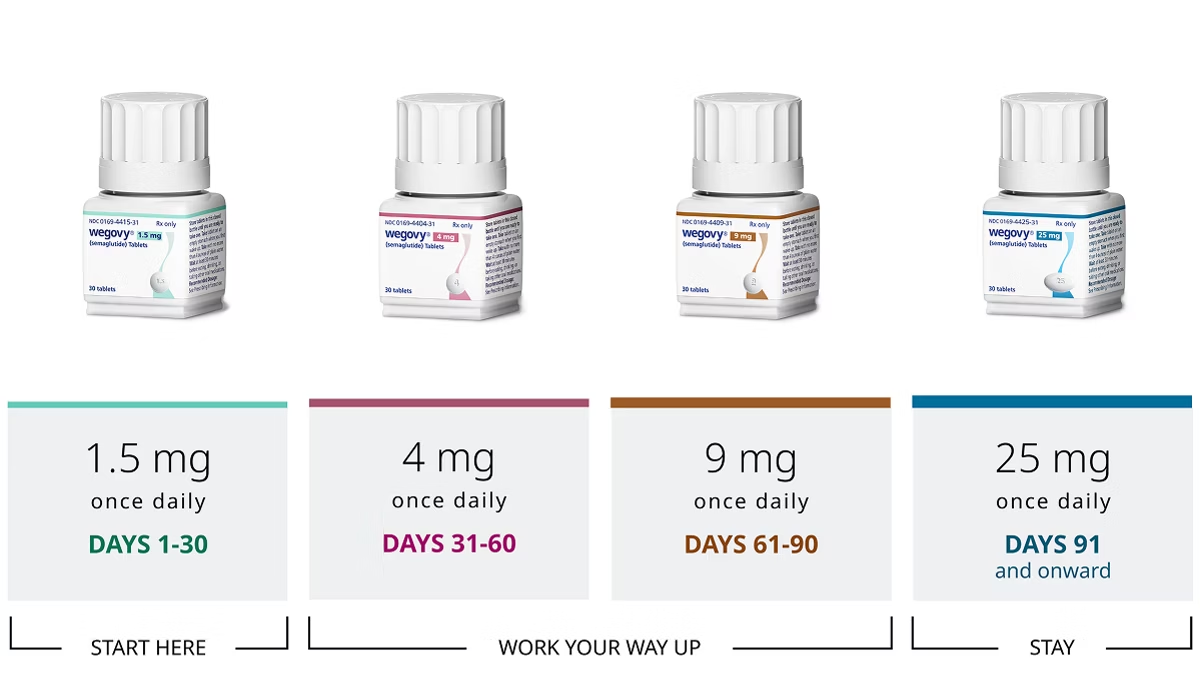
For years, GLP-1 medications for weight loss meant weekly injections. The Wegovy pill changed that. FDA approval came on December 22, 2025, making oral semaglutide the first oral GLP-1 receptor agonist approved specifically for weight management. It’s taken once daily, requires no needle, and produces results that clinical trials show are in the same range as the injectable version.
But understanding what it actually is (and what’s inside it) helps you understand why it works the way it does, what to expect from it, and what it can’t do.
Key takeaways
- The Wegovy pill is oral semaglutide 25 mg. This is the first GLP-1 receptor agonist approved as a tablet for weight management, FDA-cleared December 22, 2025
- It contains two key components: semaglutide (the active ingredient) and SNAC (the absorption technology that makes oral delivery possible)
- The drug works in three ways simultaneously: reducing hunger signals in the brain, slowing how fast food leaves the stomach, and improving how the body manages blood sugar
- In the OASIS 4 trial, patients lost an average of 16.6% of their body weight over 64 weeks — roughly comparable to the injectable version
- About 1 in 3 adherent patients lost 20% or more of their body weight
- The pill does not burn fat directly, boost metabolism, or work without some dietary awareness
What’s inside the Wegovy pill?
Every Wegovy tablet has two medically significant components: semaglutide and SNAC.
- Semaglutide is the active drug. It’s a human GLP-1 receptor agonist — a synthetic analog of the body’s own glucagon-like peptide-1 hormone, with its peptide backbone produced through yeast fermentation. The main mechanism that keeps semaglutide in the body long enough to be effective is albumin binding, achieved through a modification at position 26 lysine with a hydrophilic spacer and a fatty acid chain. In plain terms: semaglutide is designed to mimic a natural appetite hormone, but engineered to stay active in the body far longer than the natural version would.
- SNAC (sodium N-[8-(2-hydroxybenzoyl)amino] caprylate) is the delivery technology. SNAC is an absorption enhancer that temporarily raises the pH in the stomach lining and helps the semaglutide molecule cross into the bloodstream. Without it, stomach acid would destroy semaglutide before it could be absorbed — the same way it would destroy any other peptide you swallowed. SNAC is not new; it was first used in Rybelsus (oral semaglutide for type 2 diabetes) before being scaled to the much higher doses needed for obesity treatment.
A note on SNAC that most articles skip: a 2026 study from Adelaide University found that SNAC was associated with shifts in gut bacteria, elevated inflammatory markers, and depletion of proteins linked to cognitive function. This research is early-stage and does not change the current clinical picture, but it’s worth knowing that ongoing study of the oral formulation’s long-term gut effects is active. If you have existing gut health concerns, it’s a conversation to have with your provider.
The pill also contains standard pharmaceutical excipients: binding agents, fillers, and coating materials. This gives it physical structure and stability. These are inactive and not pharmacologically significant for most patients.
How the Wegovy pill gets into your body
Getting a peptide molecule through the digestive system intact is genuinely difficult. Peptides are large, fragile molecules — stomach acid and digestive enzymes break them apart before they can be absorbed. Injectable semaglutide sidesteps this problem entirely by going directly into subcutaneous tissue.
SNAC creates a localized alkaline environment in the stomach that temporarily elevates the pH around the pill as it dissolves. This slows semaglutide degradation just long enough for a fraction of the dose to be absorbed through the stomach lining before reaching the lower GI tract, where it would be fully destroyed.
This is why the dosing rules are strict and non-negotiable: the pill must be taken on an empty stomach, with no more than 4 oz (120 mL) of plain water, and you must wait at least 30 minutes before eating, drinking anything else, or taking other medications. Food, coffee, or even a large glass of water interfere with the pH environment SNAC creates. Patients who lose consistency with this routine often find the medication underperforms. It usually hasn’t stopped working; it’s simply not being absorbed properly.
How semaglutide works once it’s in your bloodstream
Semaglutide activates GLP-1 receptors in the brain and gut, which reduces appetite, increases feelings of fullness after eating, and slows the rate at which food leaves the stomach — a process called gastric emptying. These three effects reinforce each other.
Here’s what that looks like in practice:
- In the brain: GLP-1 receptors in the hypothalamus regulate hunger and satiety signals. When semaglutide binds to these receptors, you feel less driven to eat, food becomes less appealing (particularly calorie-dense foods), and the normal urgency of hunger is significantly blunted. Patients often describe this as “food noise” going quiet — the constant background thinking about eating simply diminishes.
- In the stomach: slowed gastric emptying means food stays in your stomach longer after a meal. The physical sensation of fullness persists well past when you would normally feel hungry again. Smaller meals feel adequate in a way they wouldn’t off the medication.
- In blood sugar regulation: semaglutide enhances insulin secretion in response to food while simultaneously reducing glucagon (a hormone that raises blood sugar). This is the same mechanism that makes it effective for type 2 diabetes management, and it’s why the medication also improves metabolic markers even in patients without diabetes.
Results you can and can’t expect after Wegovy pills
| What oral semaglutide does | What it does not do |
| Reduces hunger signals in the brain | Burn fat directly |
| Slows gastric emptying | Boost your resting metabolism |
| Improves insulin response | Work independently of diet and activity |
| Lowers blood pressure and cholesterol (in many patients) | Produce permanent changes after stopping |
| Reduces cardiovascular event risk | Replace the need for a maintenance plan |
What the Wegovy pill doesn’t do
This is worth spelling out, because the expectations gap causes more early dropouts than the medication itself.
The pill does not directly burn fat, stimulate thermogenesis, or raise your basal metabolic rate. It works entirely through appetite regulation and satiety — meaning the calorie deficit it creates has to come from you eating less, not from your body burning more. Patients who find workarounds (eating past fullness, frequent high-calorie snacks, highly palatable foods that override the satiety signal) can blunt results considerably.
It also does not produce permanent biological changes. Weight loss results are only maintained as long as treatment continues — Wegovy only reaches its full weight loss results after about a year, and results plateau without ongoing treatment. Current prescribing guidance increasingly treats it as an indefinite maintenance therapy for most patients, not a course you complete and then stop. Patients who read about how long oral semaglutide takes to work often find the month-by-month breakdown helps calibrate expectations better than any single summary number.
The Wegovy pill vs the injection: same drug, different delivery
The Wegovy pill and injection use the same active ingredient and work through identical biological mechanisms, activating GLP-1 receptors to drive appetite suppression and weight loss.
The key difference is delivery: the pill is taken daily and creates a peak-and-drop pattern in drug levels, while the injection provides steadier exposure throughout the week. The oral version builds on the same technology as Rybelsus but at a much higher maximum dose (25 mg vs. 14 mg), which is why it delivers significantly greater weight loss—around 14% compared to roughly 5% in diabetes trials.
Overall, results between the pill and injection are clinically comparable, making the pill a strong alternative for those who prefer a needle-free, daily routine without sacrificing effectiveness.
What the clinical trials actually show about Wegovy pills
Novo Nordisk built the FDA case for the Wegovy pill on the OASIS trial program — four Phase 3 studies enrolling approximately 1,300 adults with obesity or overweight.
OASIS 4 and Wegovy pills
OASIS 4 is the primary approval trial. Researchers randomly assigned 307 patients (79% women, mean age 48 years) without diabetes and with overweight or obesity to oral semaglutide 25 mg or placebo, plus lifestyle interventions. The trial included a 12-week dose escalation phase and 64 weeks on therapy. The primary endpoint (mean change in body weight at week 64) was 14% with semaglutide versus −2% with placebo.
With full adherence, that number improved further: oral semaglutide 25 mg achieved 16.6% mean weight loss at 64 weeks, and one-third of adherent participants achieved at least 20% weight loss, versus under 3% with placebo.
Body weight reductions of ≥5%, ≥10%, ≥15%, and ≥20% were all significantly more likely in the semaglutide group. Physical function scores also improved significantly — 16 points versus 8 points with placebo.
Beyond weight loss, the metabolic picture matters
Post hoc analyses from OASIS 4 showed that once-daily oral semaglutide 25 mg led to greater improvements in HbA1c, fasting plasma glucose, fasting serum insulin, and cardiovascular risk factors compared with placebo. At week 64, 71.1% of participants with prediabetes at baseline achieved normal blood glucose in the semaglutide group, versus 33.3% with placebo.
Participants achieving ≥15% body weight reduction showed larger reductions in systolic blood pressure (−10.1 mmHg versus −4.1 mmHg), C-reactive protein levels (a marker of inflammation), and triglycerides — improvements that matter for long-term cardiovascular health independently of the scale.
The SELECT trial and Wegovy pills
The SELECT trial (conducted with injectable semaglutide 2.4 mg) provides the cardiovascular outcomes data that extends to the pill’s approval. SELECT enrolled 17,604 patients with overweight or obesity and established cardiovascular disease, without type 2 diabetes. It was a multicenter, double-blind, randomized, placebo-controlled superiority trial conducted at 804 clinical sites in 41 countries. Semaglutide reduced major adverse cardiovascular events — a finding that contributed directly to Wegovy’s cardiovascular risk-reduction indication, which the pill shares with the injection.
Who can take Wegovy pills for weight loss
The Wegovy pill is approved to help adults with obesity, or some adults with excess weight who also have weight-related medical conditions, lose weight and keep it off — and to reduce the risk of major cardiovascular events such as death, heart attack, or stroke in adults with known heart disease and with either obesity or overweight. It is not currently approved for patients under 18.
The eligibility criteria mirror the injection: BMI ≥30, or BMI ≥27 with at least one weight-related comorbidity such as high blood pressure, high cholesterol, or type 2 diabetes. You cannot take both the pill and the injection simultaneously, and you should not combine either form with other GLP-1 medications like Ozempic or Rybelsus.
Interested in whether the Wegovy pill is right for you? Book a virtual consultation with Heally — our licensed providers review your history, answer your questions, and can issue a prescription the same day if you qualify.
FAQ
Is the Wegovy pill the same as Ozempic?
Both contain semaglutide, but they’re different products with different forms, doses, and approved indications. Ozempic is an injectable approved for type 2 diabetes management. The Wegovy pill is an oral tablet approved for chronic weight management. Same active ingredient, different product entirely.
Can I take the Wegovy pill if I have type 2 diabetes?
Possibly, but there are nuances. The OASIS 4 trial excluded patients with diabetes. Providers can still prescribe Wegovy for weight management in people with diabetes, but if additional blood sugar control is the primary need, they may recommend switching to the injectable version at certain doses. Discuss your full medical picture with a prescriber.
Why does the pill require an empty stomach when the injection doesn’t?
The injection bypasses the digestive system entirely — it’s absorbed straight through subcutaneous tissue. The pill must get through the stomach intact, which requires the specific pH environment that SNAC creates, and food disrupts that environment completely.
How is this different from Rybelsus?
Both are oral semaglutide tablets using SNAC technology, but Rybelsus tops out at 14 mg and is approved only for type 2 diabetes. The Wegovy pill reaches 25 mg — nearly double — and is approved specifically for obesity. The higher dose is the reason weight loss outcomes are substantially greater.
Can I get the Wegovy pill online?
Yes. Heally offers virtual consultations with licensed providers who can prescribe oral semaglutide if you meet the eligibility criteria. Prescriptions are sent to your pharmacy or delivered directly to your door with no in-person visit required. Schedule a consultation to get started.
Sources
SELECT trial. PMC review. ncbi.nlm.nih.gov
Novo Nordisk. “FDA approves Wegovy pill as first oral GLP-1 for weight management.” December 22, 2025. novonordisk.com
Wharton S et al. “OASIS 4: Oral semaglutide 25 mg in obesity.” New England Journal of Medicine, September 2025. acc.org summary
Applied Clinical Trials Online. “OASIS 4 analyses highlight cardiometabolic benefits of oral semaglutide.” appliedclinicaltrialsonline.com
Adelaide University / ScienceDaily. “Hidden ingredient in Ozempic and Wegovy tablets raises new gut health questions.” March 2026. sciencedaily.com
FDA prescribing information. Wegovy (semaglutide) tablets. accessdata.fda.gov