Is Acarbose Right for You?

How Long Acarbose Stays In Your System And What It Means

Man Learning From Doctor How Long Acarbose Stays In Your System And What It Means

This article on how long acarbose stays is for educational purposes only and is not a substitute for medical advice. Always follow your healthcare provider’s instructions when taking prescription medications.

If you’ve been prescribed acarbose, you may wonder how long it stays in your system and why it needs to be taken with meals rather than once a day like many other medications. These are important questions, especially if you’re managing blood sugar levels, adjusting your diet, or worrying about missed doses. Acarbose behaves very differently from most diabetes medications, and understanding its duration and metabolism can help you use it more effectively and with less confusion.

Key Takeaways

  • Acarbose works locally in the digestive system, not systemically
  • Very little of the drug enters the bloodstream
  • Its effects are short-lived and tied directly to meals
  • This is why acarbose is taken with each main meal
  • Timing matters more than “how long it stays in your body”

What Happens To Acarbose After You Take It

Acarbose is unique among blood sugar–lowering medications because it does not primarily work through the bloodstream. Instead, it acts locally in the gastrointestinal tract.

After you take acarbose with the first bite of a meal, it stays in the small intestine, where it inhibits enzymes called alpha-glucosidases. These enzymes are responsible for breaking down complex carbohydrates into simple sugars that can be absorbed into the bloodstream.

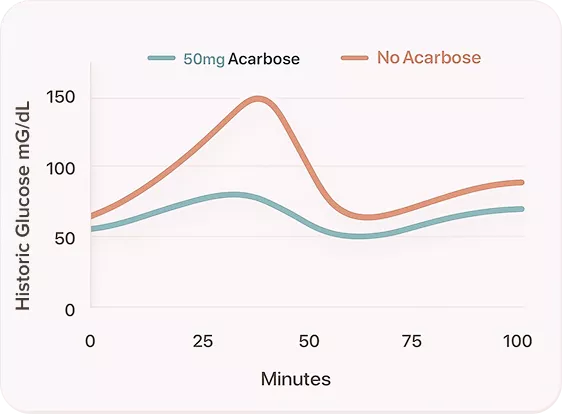
By slowing this process, acarbose reduces the speed and magnitude of post-meal blood sugar rises. Importantly, most of the acarbose dose is not absorbed into circulation. Only a very small percentage enters the bloodstream, and even that portion is rapidly metabolized.

This local action explains why acarbose:

  • Has minimal systemic side effects
  • Does not cause insulin release
  • Does not lower blood sugar when no carbohydrates are present

How Long Acarbose Stays Active In The Digestive System

Rather than asking how long acarbose “stays in your system,” it’s more accurate to ask how long it remains active in your digestive tract.

Acarbose begins working almost immediately after ingestion, as soon as carbohydrates reach the small intestine. Its activity generally lasts several hours, corresponding to the digestion and absorption window of the meal it was taken with.

Once the meal has passed through the small intestine, acarbose’s effect diminishes. It does not continue working long after digestion is complete, and it does not accumulate from one meal to the next.

Acarbose Activity Timeline (Simplified)

Stage What’s Happening
With First Bite Acarbose begins inhibiting carb-digesting enzymes
During Digestion Carbohydrate breakdown slows
Post-Meal (2–4 hrs) Blood sugar rise is blunted
After Digestion Drug effect tapers off
Between Meals Minimal to no activity

This short, meal-linked duration is intentional and central to how acarbose works.

What Acarbose’s Half-Life Means For Dosing

The concept of half-life usually refers to how long it takes for half of a drug to be eliminated from the bloodstream. For acarbose, this concept can be misleading.

Because acarbose is minimally absorbed, its plasma half-life is not clinically meaningful in the same way it is for other medications. The small absorbed portion is metabolized primarily by intestinal bacteria and liver enzymes, with metabolites excreted through urine and feces.

What matters more than half-life is functional duration — how long acarbose is actively blocking carbohydrate digestion.

This is why acarbose:

  • Is taken with each main meal
  • Is not taken once daily
  • Does not “carry over” to the next meal

Taking acarbose without food provides little to no benefit, because there are no carbohydrates to slow.

What To Do If You Miss A Dose Of Acarbose

Missed doses are a common concern, especially because acarbose must be timed with meals.

The general guidance is simple:

  • If you forget to take acarbose and have already finished eating, skip the dose
  • Do not take it between meals or with the next meal to “make up for it”

Because acarbose only works on carbohydrates present during digestion, taking it after the meal has passed will not meaningfully affect blood sugar and may increase gastrointestinal side effects.

Importantly, taking extra doses does not improve blood sugar control and may worsen bloating, gas, or abdominal discomfort.

How Acarbose Clearance Affects Blood Sugar Control

Acarbose’s rapid clearance from the digestive system means its benefits are entirely dependent on consistent timing.

Unlike medications that provide round-the-clock glucose lowering, acarbose only affects post-meal glucose spikes. If doses are skipped frequently or taken inconsistently, blood sugar control may appear unpredictable.

This short duration can be both a strength and a limitation:

  • It allows targeted control of post-meal glucose
  • It avoids prolonged hypoglycemia
  • It requires adherence with each carbohydrate-containing meal

For individuals who eat irregularly or consume low-carbohydrate meals, acarbose may have variable effects, which is why individualized dosing guidance from a healthcare provider is important.

Acarbose Duration Compared To Other Diabetes Medications

Medication Class Duration Of Action Systemic Absorption
Acarbose Meal-specific (hours) Minimal
Metformin 12–24 hours Systemic
GLP-1 agonists Days to weeks Systemic
Insulin Variable Systemic

This comparison highlights why acarbose behaves differently and why questions about “how long it stays in your system” often need a different framing.

Final Thoughts On Acarbose Duration And Effectiveness

Acarbose does not linger in the body in the way many medications do. Instead, it works briefly and locally, targeting carbohydrate digestion during meals. This makes its timing far more important than its half-life.

Understanding this helps set realistic expectations, reduces anxiety about missed doses, and clarifies why consistent meal-based dosing is essential for stable blood sugar control. When used correctly, acarbose can be a useful tool for managing post-meal glucose without systemic effects.

Conclusion on How long Acarbose Stays

Acarbose remains active in your system only for as long as you digest food, typically a few hours after each meal. Because your body minimally absorbs the drug and it has a short duration, you must take it with every main meal and should not double missed doses. Knowing how acarbose works — and how quickly it clears — allows patients to use it more confidently and effectively as part of a broader blood sugar management plan.

Heally connects you with licensed clinicians who focus on practical, day-to-day care. During your visit, you’ll review your meal patterns, activity, and readings, then discuss whether acarbose belongs in your plan. If it’s a fit, we’ll outline clear timing instructions, simple nutrition adjustments, and a follow-up schedule to check how your post-meal glucose responds. We’ll also talk through insurance and pharmacy options so you know what to expect.

In plain terms, how acarbose works: it may slow carbohydrate digestion, so sugar enters your blood more gradually after you eat. It doesn’t push insulin or act when you’re fasting; it simply helps soften the after-meal spike. When you understand this, you can use acarbose at the right moment (the first bite) and pair it with meals that support your goals. If you’re curious whether acarbose fits your situation, talk with a licensed clinician about your options. Schedule a consultation with Heally today.

Sources

  • American Diabetes Association. Pharmacologic Approaches to Glycemic Treatment (2025). Diabetes Journals
  • FDA Label (Precose/acarbose). “Take at the start (with the first bite) of each main meal.” FDA Access Data
  • MedlinePlus. “Acarbose—how to use; first bite of each main meal.” MedlinePlus
  • StatPearls. Acarbose—mechanism and post-meal effect. NCBI
  • StatPearls. Alpha-Glucosidase Inhibitors—class overview and timing. NCBI
  • Mayo Clinic. Acarbose (oral route)—patient information and description. Mayo Clinic
  • Nature Reviews Endocrinology. Effects of alpha-glucosidase-inhibiting drugs on acute PPG. Nature
  • Cochrane Library. Alpha-glucosidase inhibitors for type 2 diabetes—evidence overview. Cochrane

Disclaimer

This content on how long acarbose stays is for informational purposes only and does not constitute medical advice. Medication effects, dosing schedules, and safety considerations vary by individual. Acarbose should only be used as prescribed by a licensed healthcare provider. Patients should consult their clinician before making changes to medication timing, dosage, or diet.

Important Note

Acarbose is FDA-approved for managing type 2 diabetes and has specific dosing, monitoring, and safety considerations. Off-label uses or alternative products may carry additional risks related to quality, safety, or effectiveness. Never start, stop, or change any medication without professional guidance. Always consult your healthcare provider before making changes to your diabetes care plan.


Interested in alternative treatment options? Check out our different services.
Interested in Learning More? Book Free Consultation.
Explore the Benefits of Acarbose
0 Shares: